



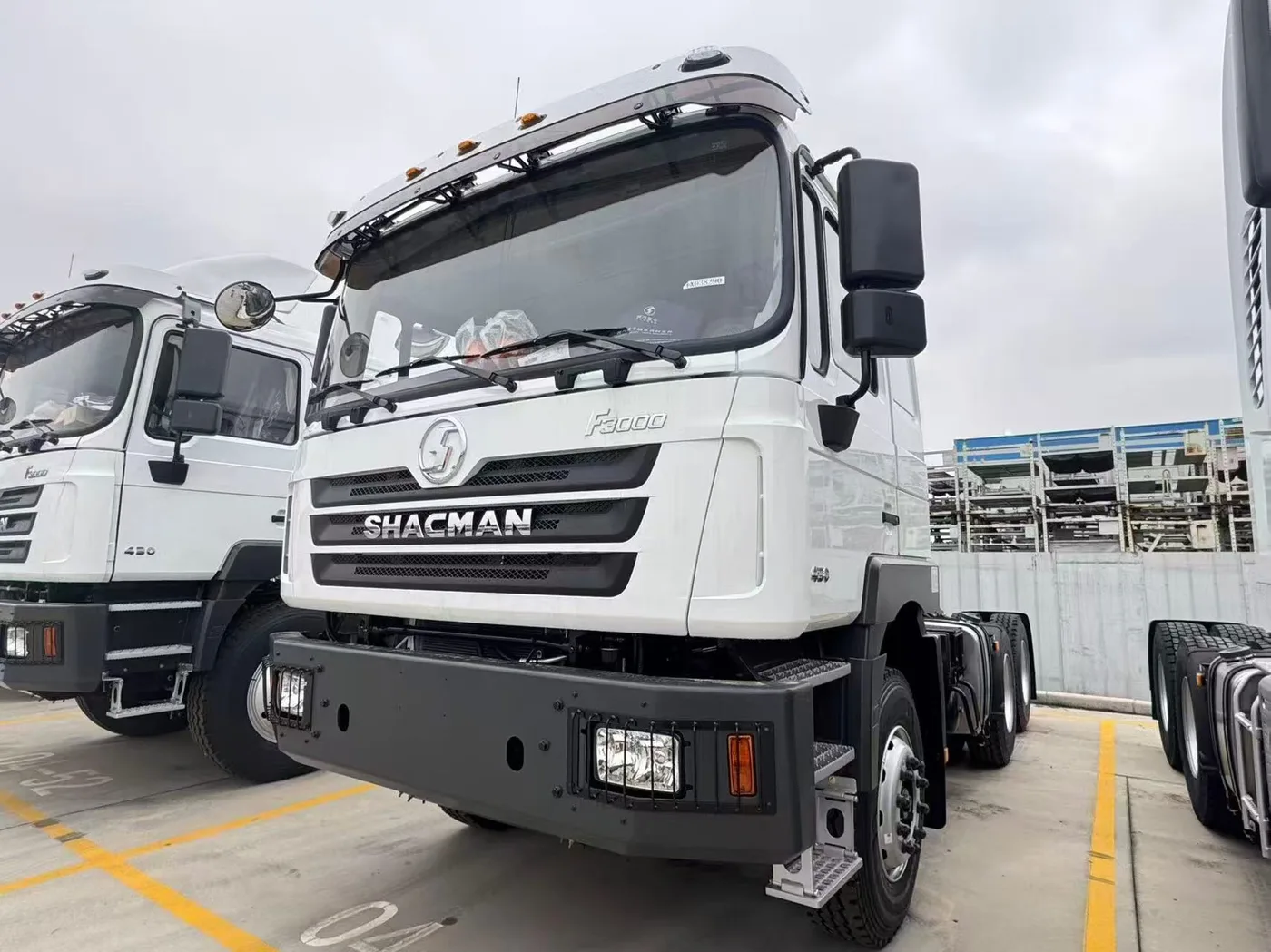
For fleet engineers and operators, a tractor head is judged by how its powertrain, chassis and running gear work together under sustained load. The Shacman Delong F3000 6×4 is an established heavy-duty prime mover built around a conventional, mechanically transparent driveline. This breakdown examines its performance across power delivery, structural capacity, drivetrain matching, braking and serviceability, based on publicly available specification sheets for representative 375 hp and 430 hp builds.
Spec note: Figures below correspond to published sheets for the 430 hp SX4255JV324 and 375 hp SX4257NT324K1. Model codes, ratios and equipment vary by build and destination; confirm the actual unit against its nameplate and inspection report.
1. Powertrain: Low-speed torque for loaded gradients
The F3000 6×4 is offered primarily with Weichai WP10/WP12 inline-six turbo-diesel engines, with a Cummins ISM option in some markets.
430 hp WP12.430E201: 430 hp, 11.596 L displacement, peak torque around 2,000 N·m across 1,000–1,400 rpm;
375 hp WP10.375E32: 375 hp at 2,200 rpm, 9.726 L, torque around 1,800 N·m across 1,200–1,600 rpm.
The relevant performance characteristic is torque availability in the low-to-mid rev band. For a loaded tractor, this reserves climbing force before the engine reaches high speed, reducing gear work on ramps and protecting the clutch and drivetrain from repeated stall-and-launch stress. The large-displacement layout also keeps engine load moderate during steady cruise, which supports service life on long-distance schedules.
2. Drivetrain matching: 12-speed manual with crawler control
Power is transmitted through a FAST 12-speed manual gearbox — 12 forward ratios plus two reverse — matched to the engine's torque curve.
430 hp sheet: 12JSD200T-B; 375 hp sheet: 12JSD160TA;
Clutch: Ø430 diaphragm (430 mm dry single-plate on the 375 hp build);
Off-road versions include a crawler gear (ratio around 15.53) for controlled low-speed positioning under loading hoppers and crushers.
The wide ratio spread lets the driver hold the engine in its efficient torque band on climbs and descents alike. The crawler gear is the meaningful differentiator on mining and quarry sites: it permits precise, low-speed maneuvering under load without riding the clutch.
3. Chassis and axles: Load-bearing structure for heavy trailers
The 6×4 configuration drives two rear axles, which distributes tractive effort and rear load across more wheel ends than a 4×2.
Front axle: MAN-series 7.5 T I-beam;
Rear axle: double-reduction drive, 13–16 T class, final drive 4.266 (430 hp) or 5.262 (375 hp); off-road builds use 16 T×2 hub-reduction axles at 5.92;
Frame: high-strength steel, 280×8+6 mm on the 375 hp version; mining builds use a double-layer 300×80×(8+5) mm rail with internal stiffening at the fifth-wheel area;
Suspension: multi-leaf spring (10/12 leaves), chosen for load capacity and durability over tuned ride;
Fifth wheel: 90# reinforced saddle with reinforced mounting plate;
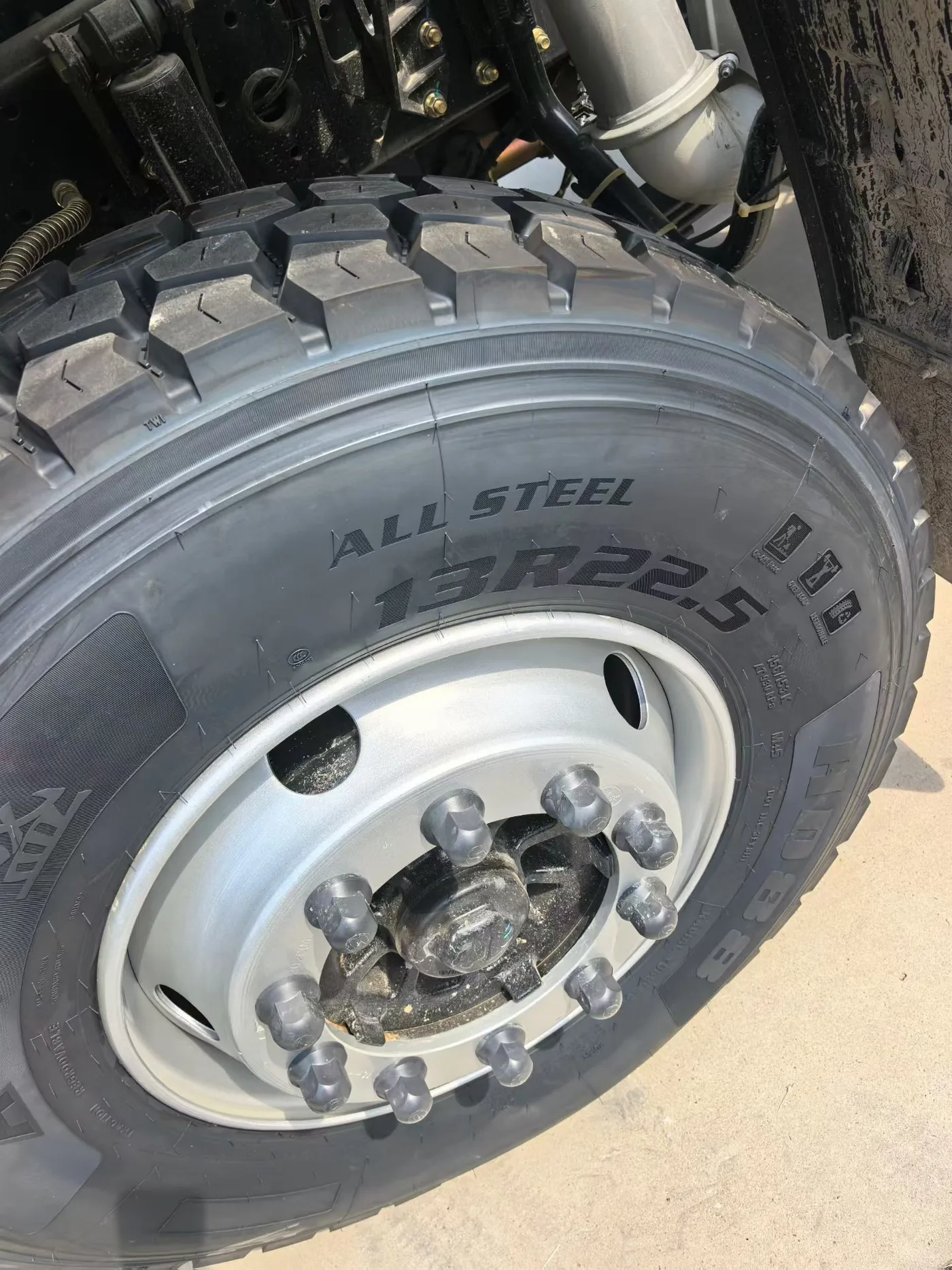
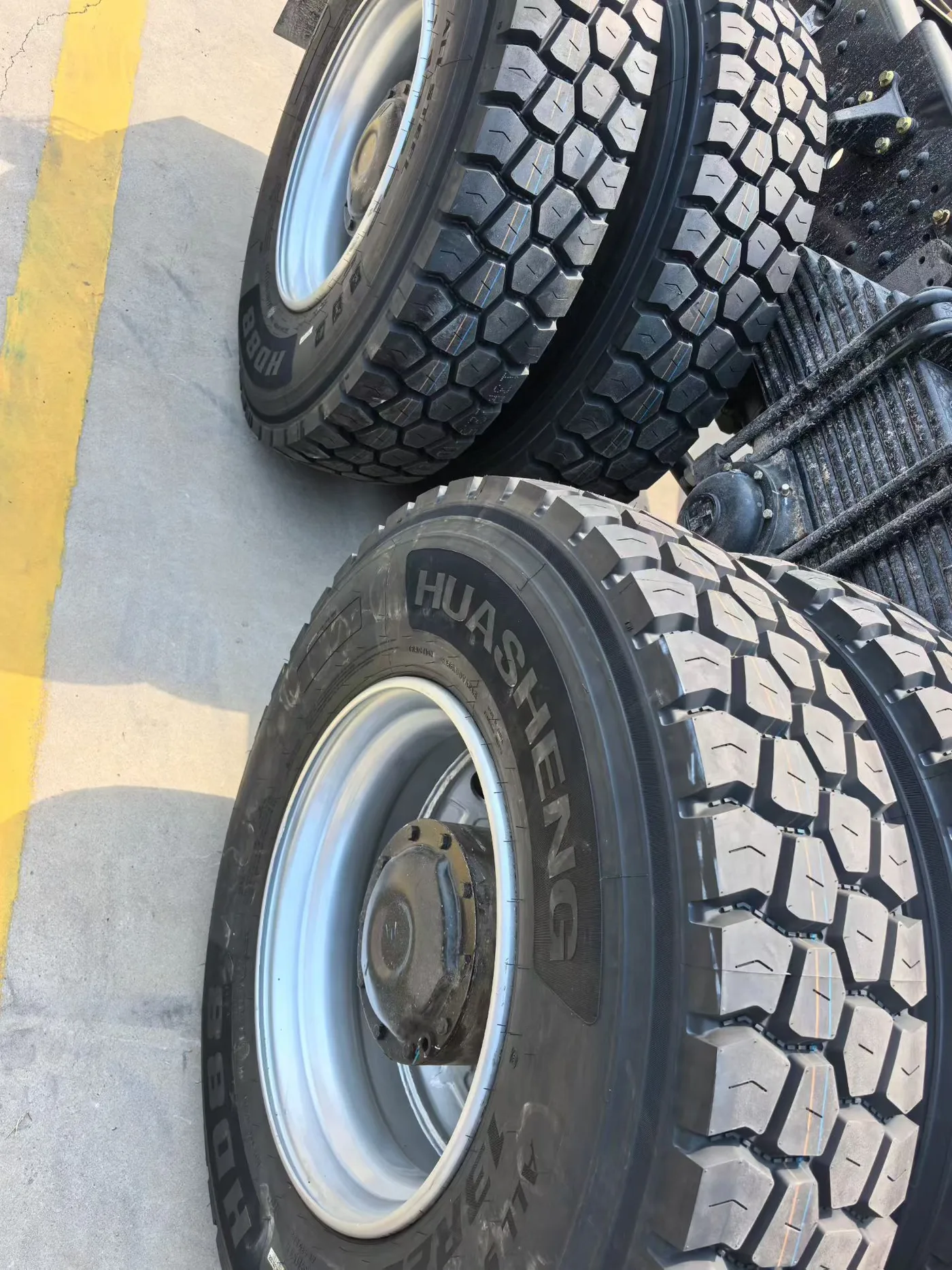
Tyres: 12.00R20 radial (10 + 1 spare) or 13R22.5 all-steel off-road radial, depending on version.
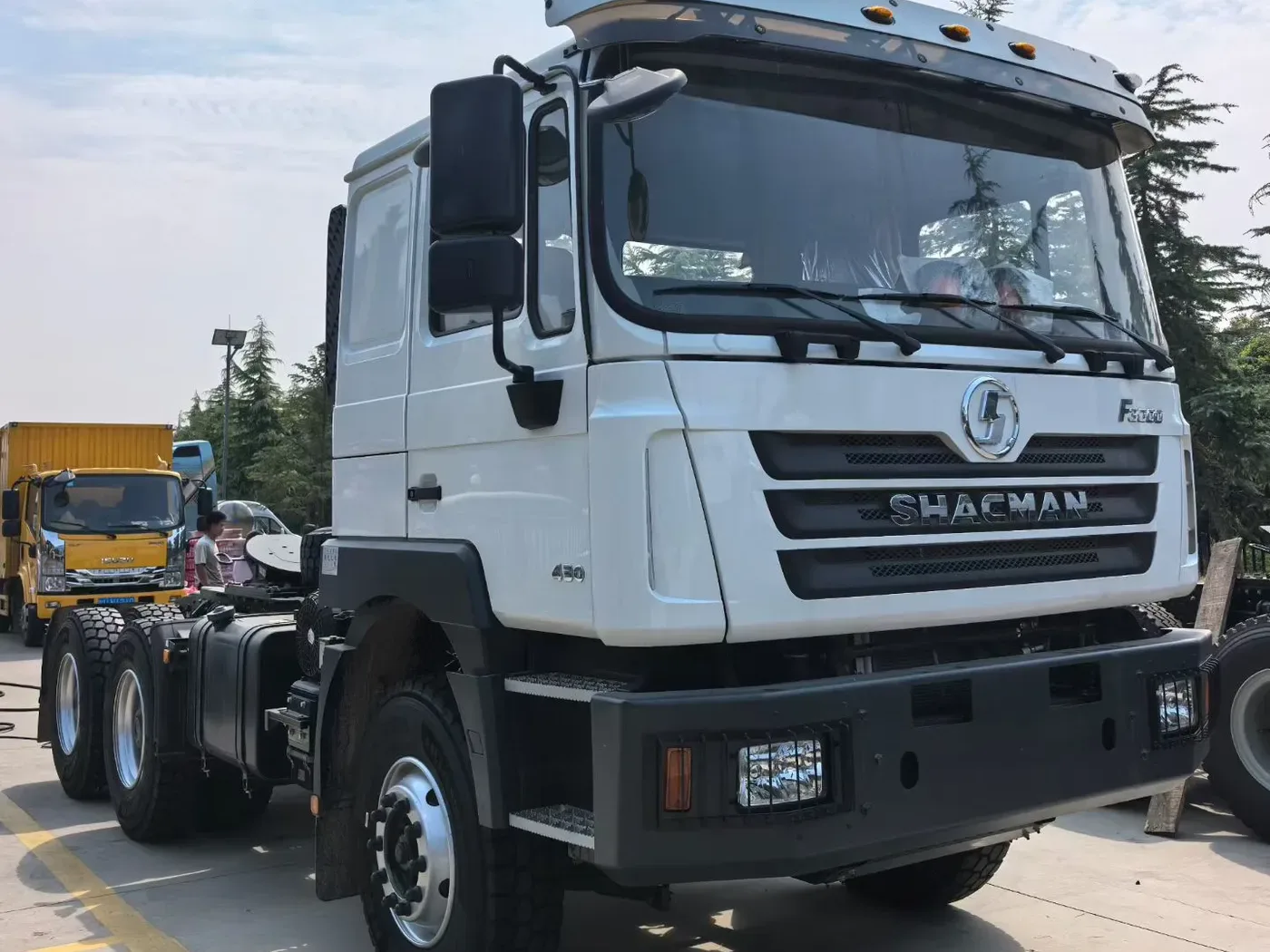
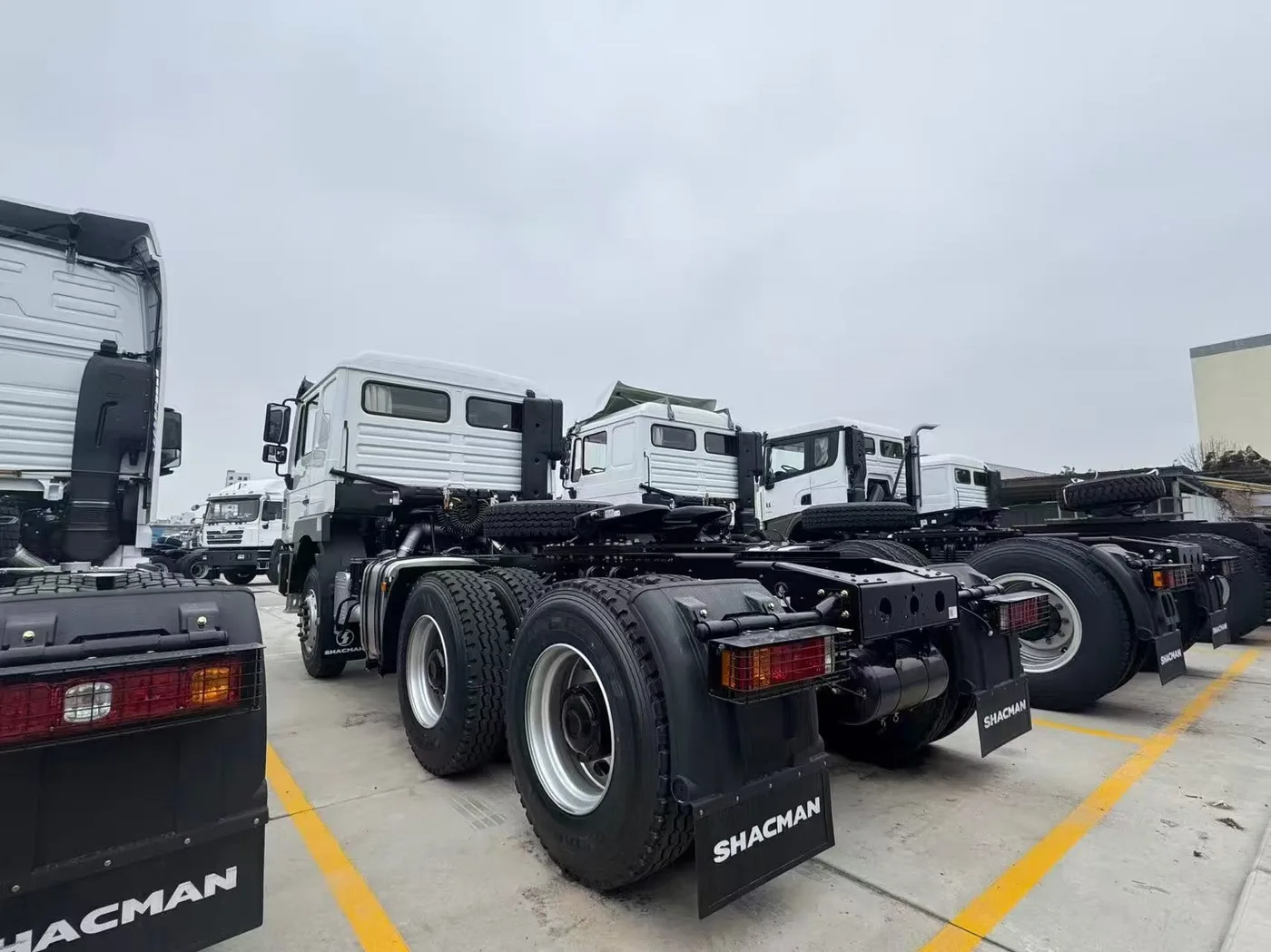
Published combination ratings reach approximately 40–45 t GCW on road builds, and up to 50 t off-road / 60 t on-site on reinforced mining editions. The double-layer frame and hub-reduction axles are the structural elements that absorb repeated torsion and impact from unpaved haul roads, rather than relying on leaf springs alone.
Dimensions and weight (representative versions):
Overall (L×W×H) — 430 hp SX4255JV324: 6,785×2,490×3,560 mm; 375 hp SX4257NT324K1: approx. 6,825×2,490×4,000 mm.
Wheelbase — 430 hp: 3,175+1,400 mm; 375 hp: configurable 3,800 / 4,200 mm.
Curb weight — 430 hp: 8,800 kg; 375 hp: approx. 8,500 kg.
Total mass / GCW — 430 hp: 25,000 kg total mass; 375 hp: GCW up to 40,000 kg.
Max. speed — 430 hp: 95 km/h; 375 hp: 98 km/h.
Approach / departure — 430 hp: 20° / 60°; 375 hp: refer to the actual unit.
4. Tyres and running gear
The truck runs all-steel radial off-road tyres with a sturdy carcass and deep tread blocks, suited to grip on mining sites, construction yards and unpaved roads. Steel wheels and multi-stud hub fasteners support on-site servicing. Exact tyre size varies by build; refer to the sidewall marking on the actual unit.
5. Braking and electrical systems
Service brake: dual-circuit air brake with drum brakes;
Parking brake: spring brake acting on the rear axle;
Electrics: 24 V system, 120 Ah battery, engine preheating fitted;
Options listed publicly: hydraulic retarder, auxiliary brake, up to 1,000 L fuel tank.
For long downhill sections on loaded routes, an auxiliary retarder reduces service-brake duty and limits brake-heat fade; this option should be confirmed on the specific build, as standard fitment varies.
6. Cab and driver comfort
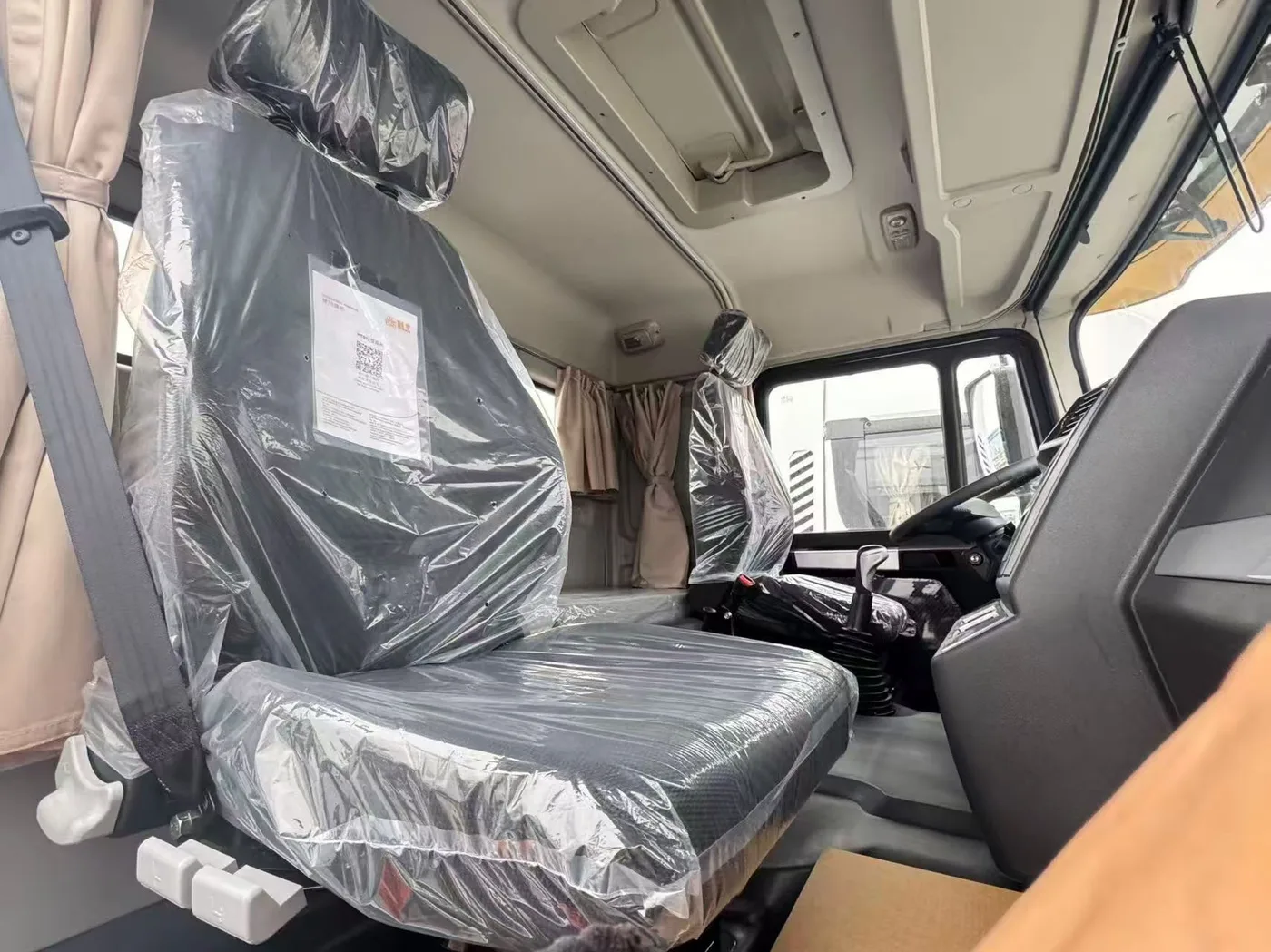
The F3000 cab is a functional working environment rather than a luxury interior. Typical versions offer a sleeper configuration, a hydraulic or air-suspended driver seat on higher trims, and a clearly laid-out dashboard grouped around the driver. Noise insulation and seat comfort vary by year and trim level; for routes with long daily driving hours, the cab specification is worth checking during inspection.
7. Reliability, parts and the practical cost case
A large installed base in African, Middle Eastern, Central Asian and Southeast Asian fleets rests on two engineering choices: a widely standardized mechanical driveline, and a large installed base that local workshops already know.
The Weichai / FAST / Hande-MAN component layout is familiar to independent mechanics, reducing diagnosis time; common wear parts are comparatively accessible and priced below niche imported brands; mechanical, non-proprietary systems mean routine maintenance does not require dealer-only diagnostic software.
The balance to keep in view: this specification prioritizes work capacity over interior refinement. Cab insulation, seat comfort and driver aids vary by year and trim, and a used unit must still be evaluated on its own engine, gearbox, chassis, brake and electrical condition.
8. Suitable operating profiles
Regional bulk and general cargo hauling over 200–500 km corridors;
Coal, aggregate and grain semi-trailer work;
Quarry and mining access with reinforced frame and hub-reduction axles;
Construction-site trailer positioning requiring crawler-speed control.
It is not the optimum choice for light urban distribution, where a lighter 4×2 would offer better fuel economy and maneuverability.
9. Points to verify before ordering
Emission standard against destination import rules;
Steering side — most export examples are LHD, RHD availability depends on build;
Engine code, power and axle ratio matching the intended load and route gradient;
Cab type (flat/raised roof, sleeper berth, seat and suspension) for daily route length;
New or used condition, mileage, year and remaining service life, backed by inspection report and walkaround video.
10. Sourcing a matched F3000 6×4
We source Shacman F3000 6×4 prime movers from China to match destination emission rules, steering side and workload — new or inspected used. Every supplied unit includes a pre-shipment inspection report, walkaround video and cross-checked export documentation, with one contact following the order from selection to port handover.
Share your destination port, trailer type, expected GCW and new/used preference; we reply within three working days with suitable units and inspection materials. Reach us on WhatsApp or the enquiry form.
Sources: public Shacman specification sheets (shacman.ltd, shacman-group.com, shacmaninternational.cn, shacmansx.com); final figures follow the unit nameplate and inspection report.