



When sourcing a used or new crawler excavator, buyers often start with brand and price before checking whether the tonnage fits the job. A machine that is too large loses maneuverability and fuel economy; one that is too small cannot meet the required bucket output and digging force. This guide uses three classes currently in our stock — a 5 t zero-tail-swing mini, a 20 t general-purpose mid-size, and a 37–38 t large excavator — to lay out a site-and-material based selection logic, so buyers can fix the right class before requesting quotations.
Spec note: operating weight, power and bucket figures below are drawn from published specification sheets or registered stock records. They vary with engine calibration, attachments and production batch; the actual unit must be confirmed against its nameplate, bucket tag and pre-shipment inspection report. Items marked TBC are to be verified during inspection.
1. Start with three constraints: site, material, schedule
①Tonnage is ultimately a balance among three sets of constraints:②Site conditions: narrow yards, orchards, indoor demolition and village-road upgrading call for a compact machine with a small swing radius that can pass through narrow gates; open earthworks, foundations and stockpiles allow mid-to-large machines;③Material type: loose soil, clay, gravel, weathered rock and hard rock place different demands on digging force, bucket capacity and tooth structure; harder material needs greater machine weight and hydraulic flow;④Schedule and output: work backward from the planned daily volume to bucket capacity and cycle count, then to the required tonnage class, rather than fixing the machine first and forcing output to match it.
2. Class one: 5 t zero-tail-swing mini for confined sites
This class typically runs 5–6 t operating weight, with a narrow body and a tail that swings within the track width. It suits yard leveling, orchard trenching, municipal pipe trenches, indoor demolition and small-project support. Reference unit in stock:
SANY SY55U(G4): used, 230 working hours; Kubota V2607-DI-T turbo-diesel, 2.615 L, 36 kW (approx. 49 HP); operating weight 5.78 t; standard bucket 0.23–0.25 m³; zero-tail-swing design with dozer blade.
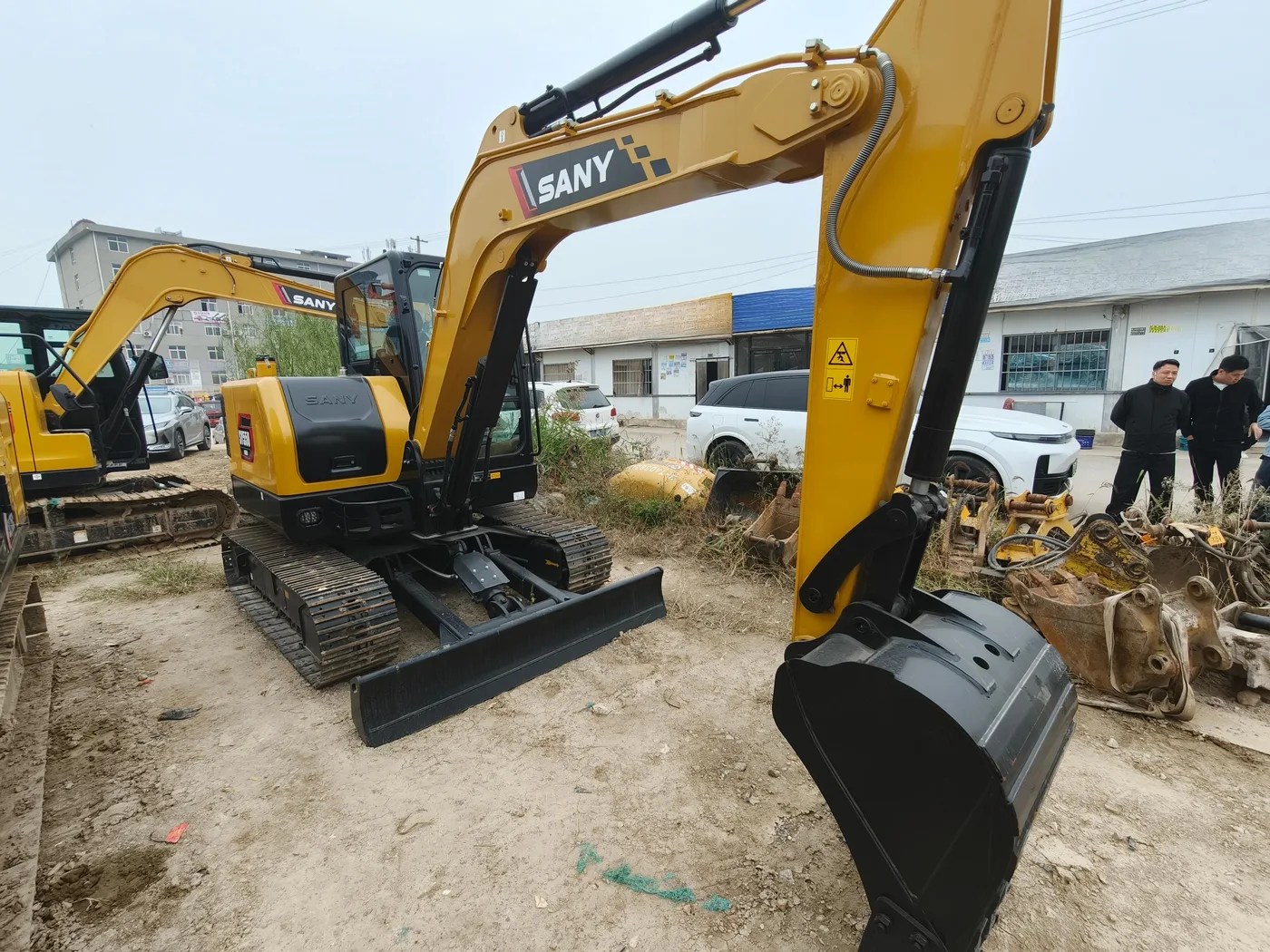
The trade-off at this size: the mini gains maneuverability and low unit cost, but its bucket capacity, lifting ability and hard-soil performance are limited; for deeper foundations or heavy material, step up to a mid-size excavator. When buying, verify engine condition, hydraulic pump pressure, track wear and dozer state; hours and service records must agree with the hour meter and inspection video.
3. Class two: 20 t general-purpose mid-size, the workhorse
The 20 t class is the most common workhorse for earthworks, foundation excavation, municipal pipelines and stockpile work, balancing output, access and running cost. Our mid-size stock spans different years, hour levels and powertrain configurations:
3.1 Reference units and registered figures
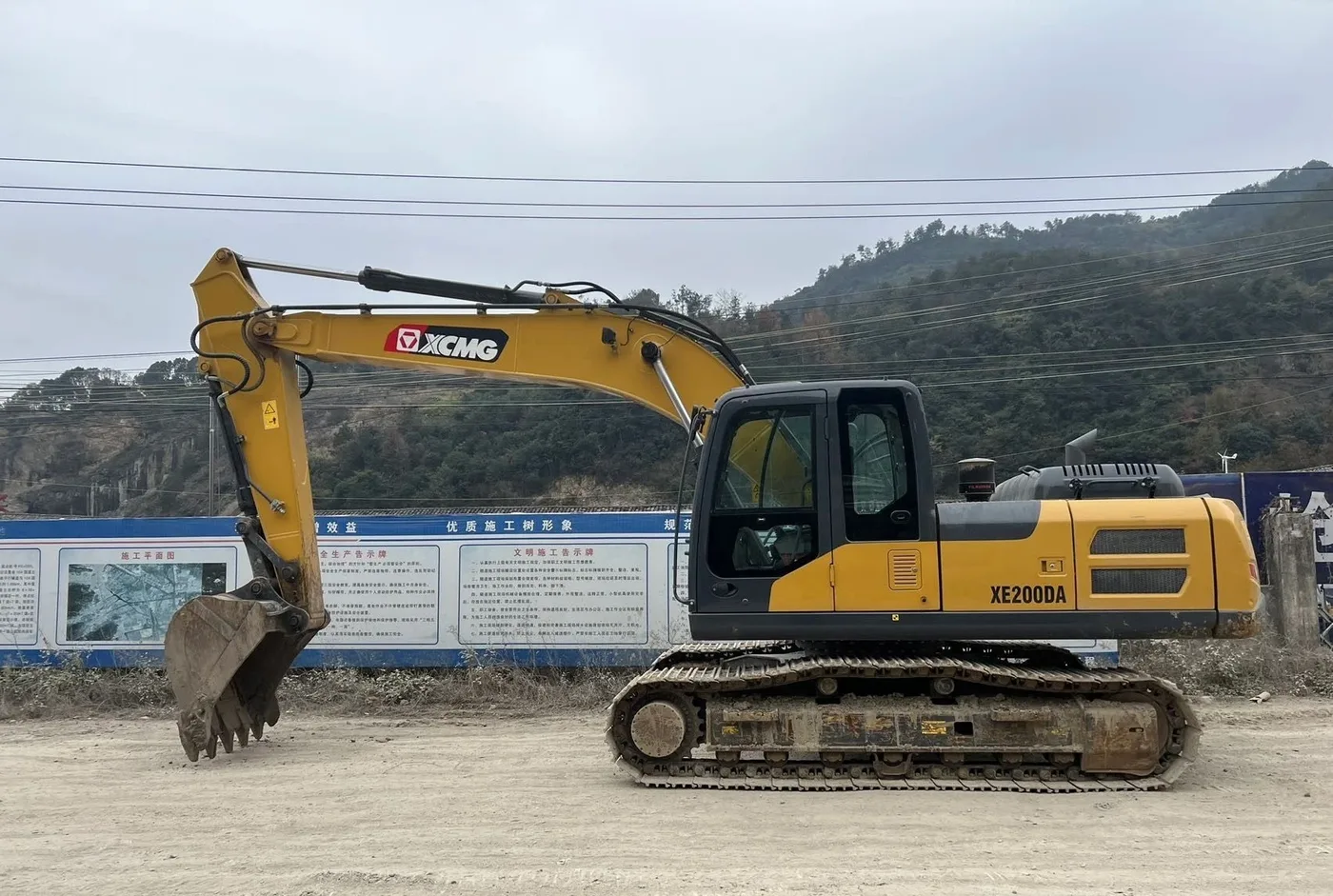
XCMG XE200DA | 2021 / 518 h | Cummins QSB7, 6.7 L | 135 kW (approx. 181 HP) | 21.2 t | 0.93 m³
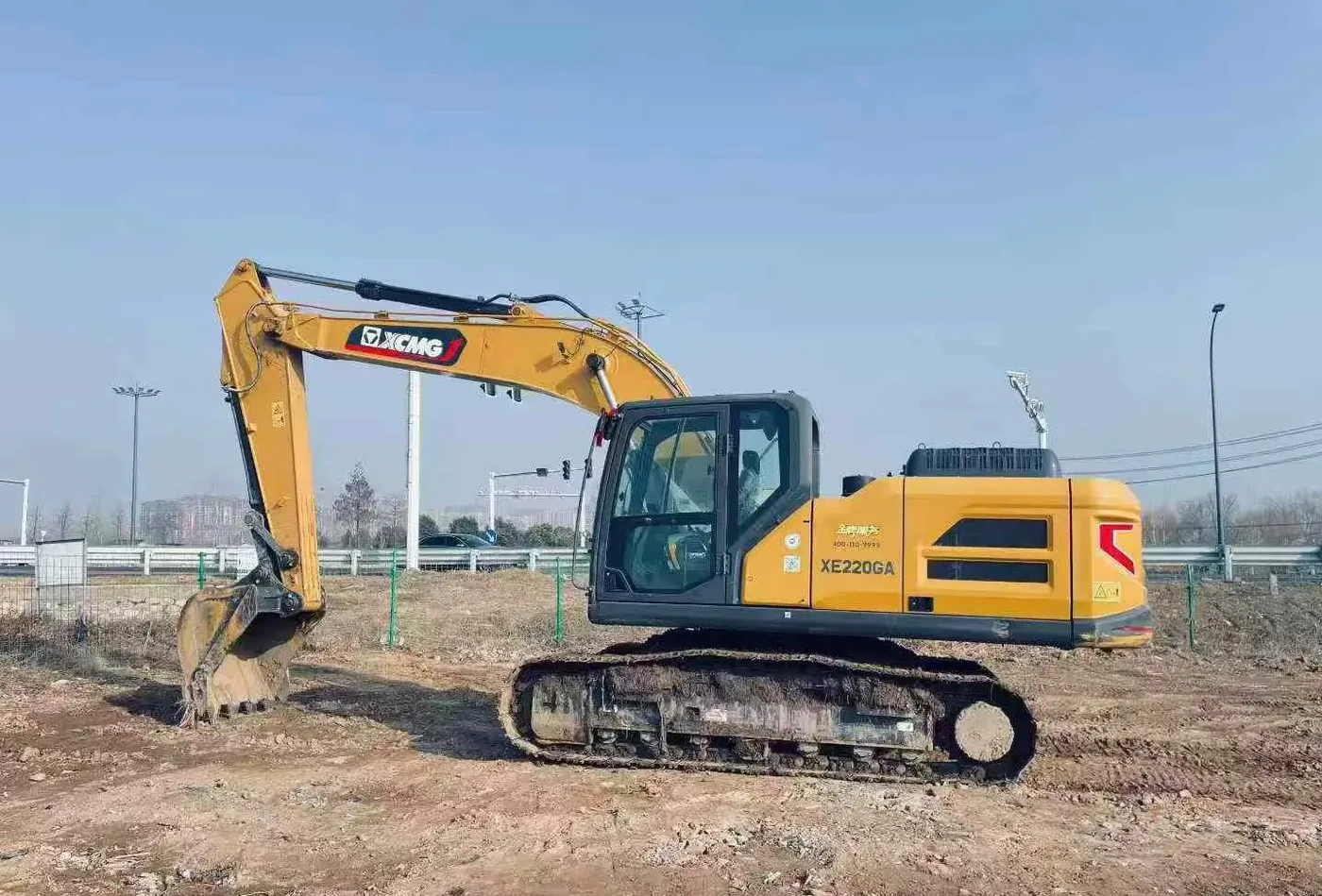
XCMG XE220GA | 2025 / 500 h | Engine model TBC | Power TBC | Operating weight TBC | Bucket TBC (to be verified)
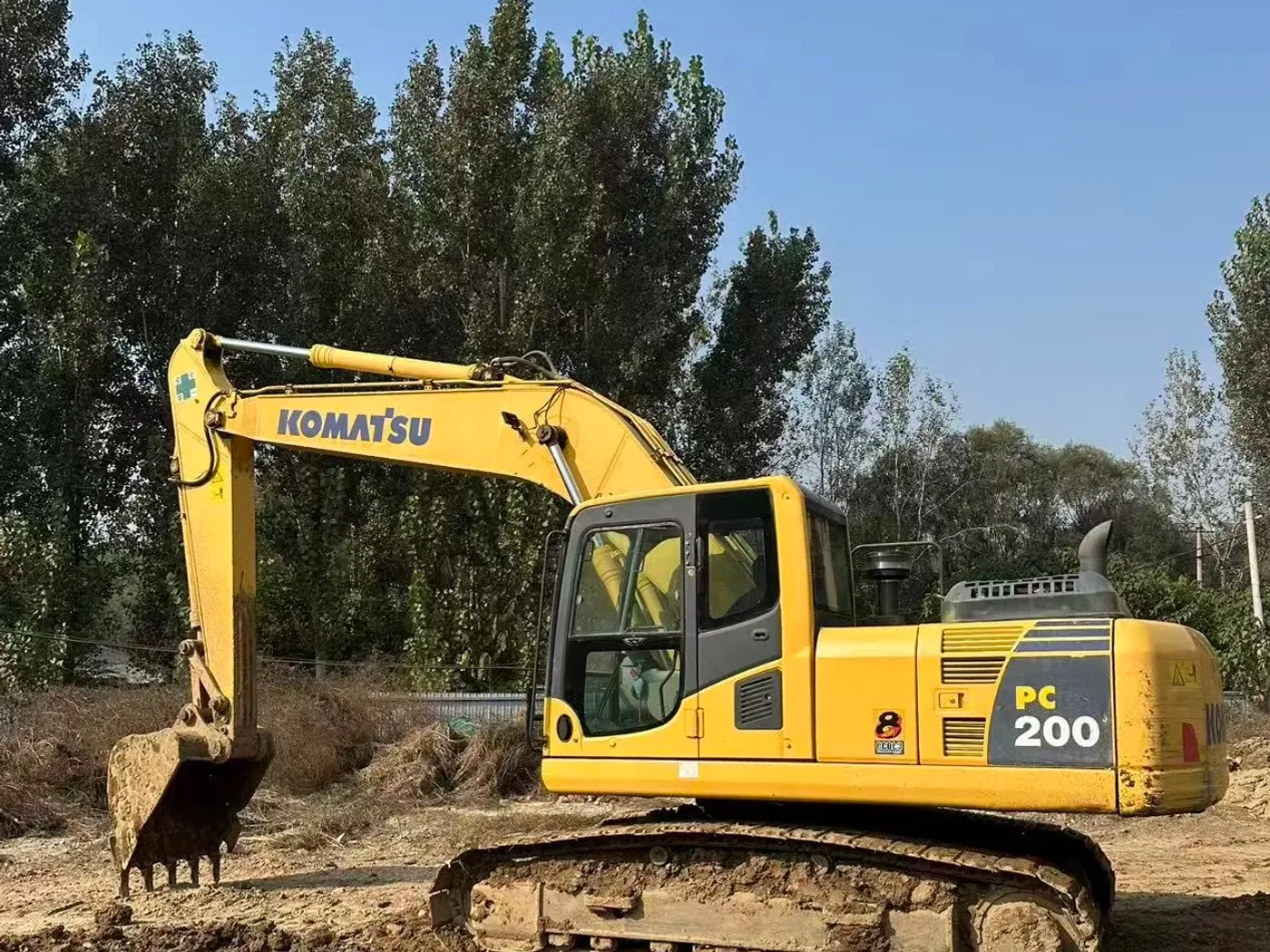
Komatsu PC200 | 2021 / 6,000 h | Komatsu 6D107, 6.69 L | 110 kW (approx. 147 HP, gross rating) | approx. 20 t | 0.8–1.0 m³ class, per bucket tag
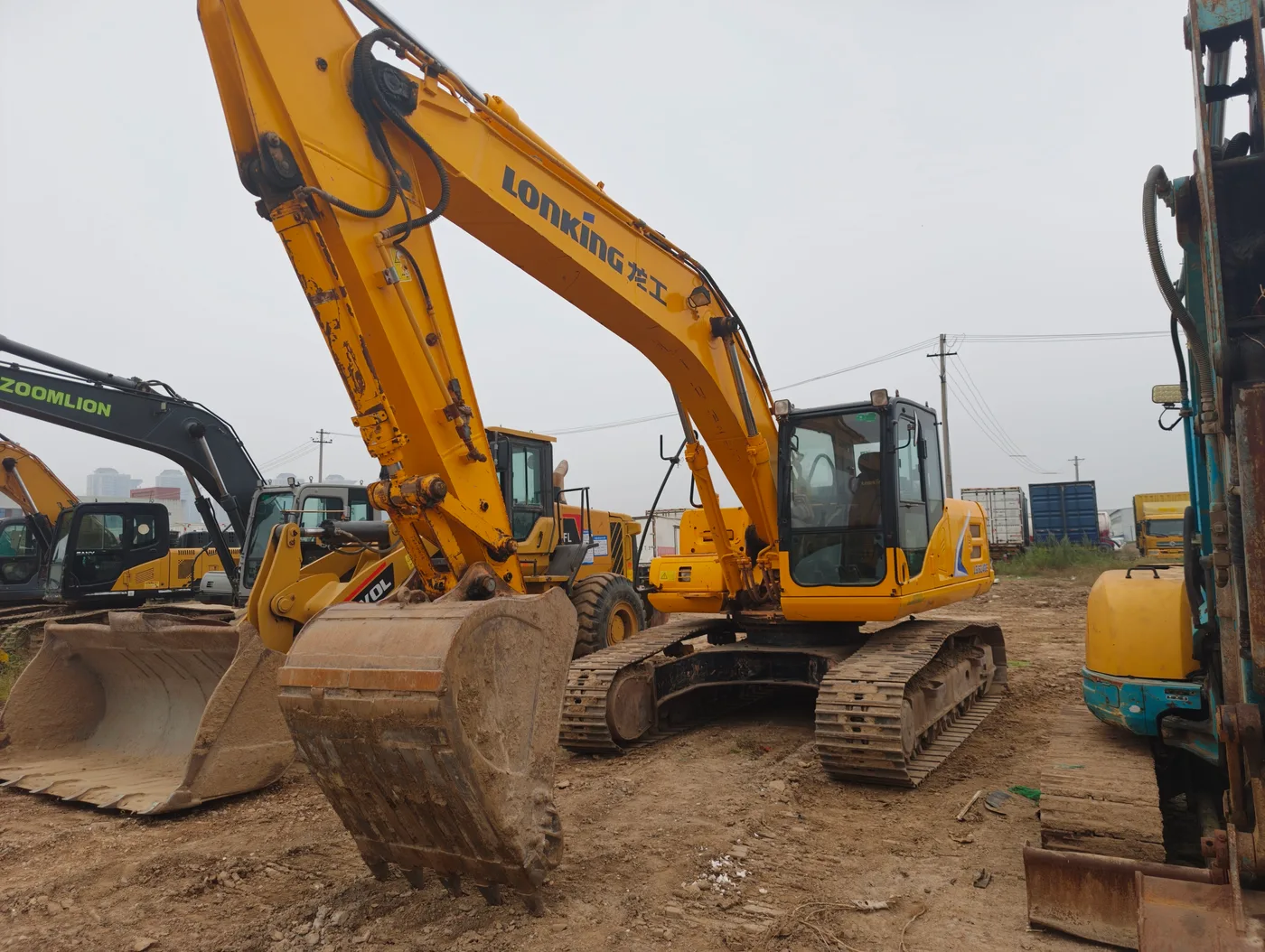
Lonking LG6240E | 2020 / 4,500 h | Cummins QSB6.7-C190-Ⅲ, 6.7 L | 145 kW (approx. 194 HP) | 22.0 t | 0.8–1.25 m³, standard bucket TBC
3.2 How to choose within this class
①Long earthwork schedules: prioritize engine and hydraulic condition, overhaul records and the availability of wear parts;②Short projects seeking low acquisition cost: a higher-hour but well-maintained Japanese or Chinese unit can be considered; inspect the hydraulic pump, control valve and travel motors closely;③Emission: check Stage III / Stage IV and the matching fuel standard against destination import rules before export;④Buckets and attachments: standard bucket, ripper, breaker and other attachments are configured to the job; bucket capacity follows the actual bucket tag.
4. Class three: 37–38 t large excavator for heavy material
Large machines target mass earth stripping, mines, aggregate yards and heavy loading. Their weight, hydraulic flow and bucket capacity are clearly above mid-size units, with higher single-machine output — but they also place greater demands on transport, ground bearing and fuel cost. Reference large units in stock:
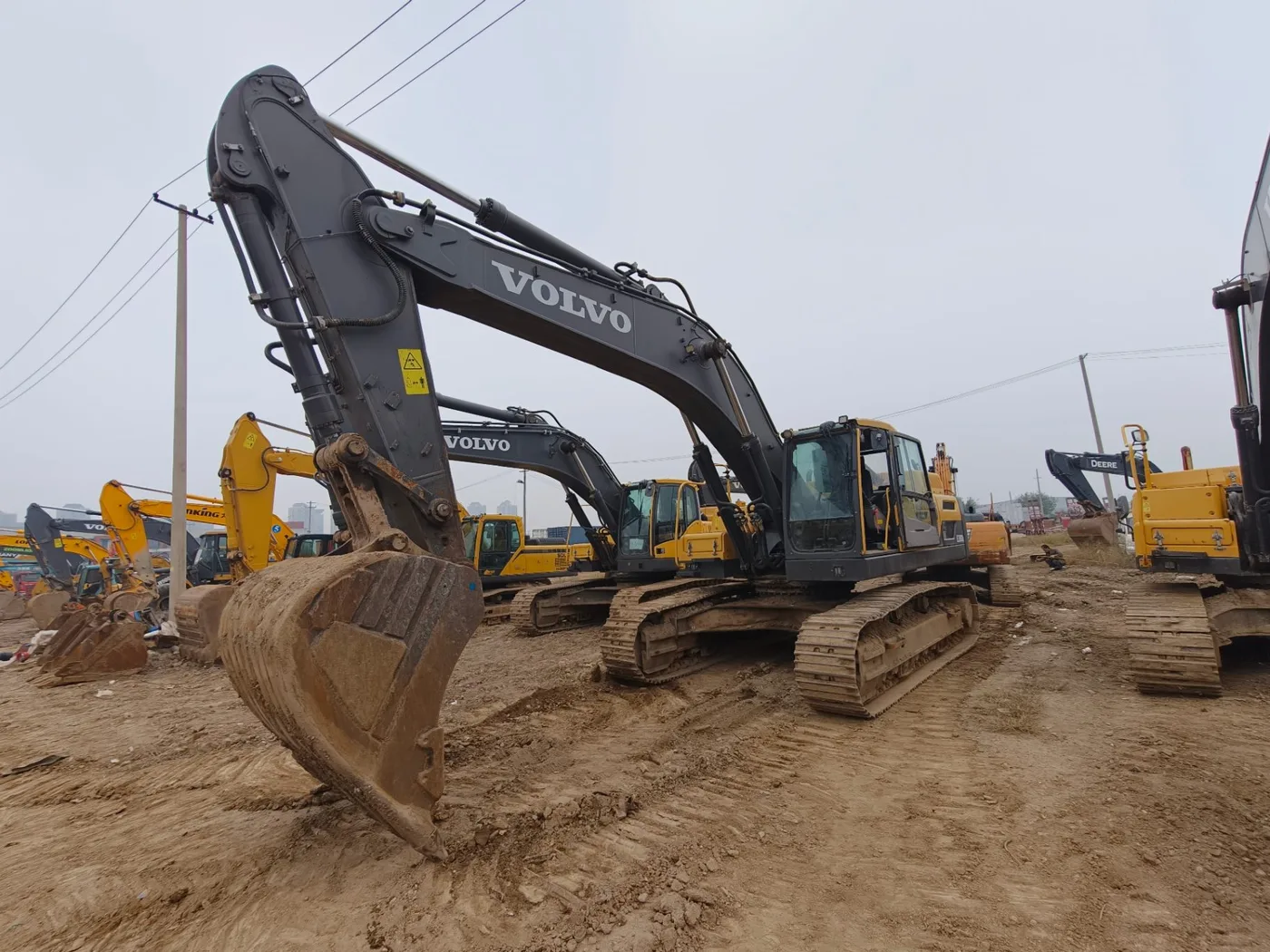
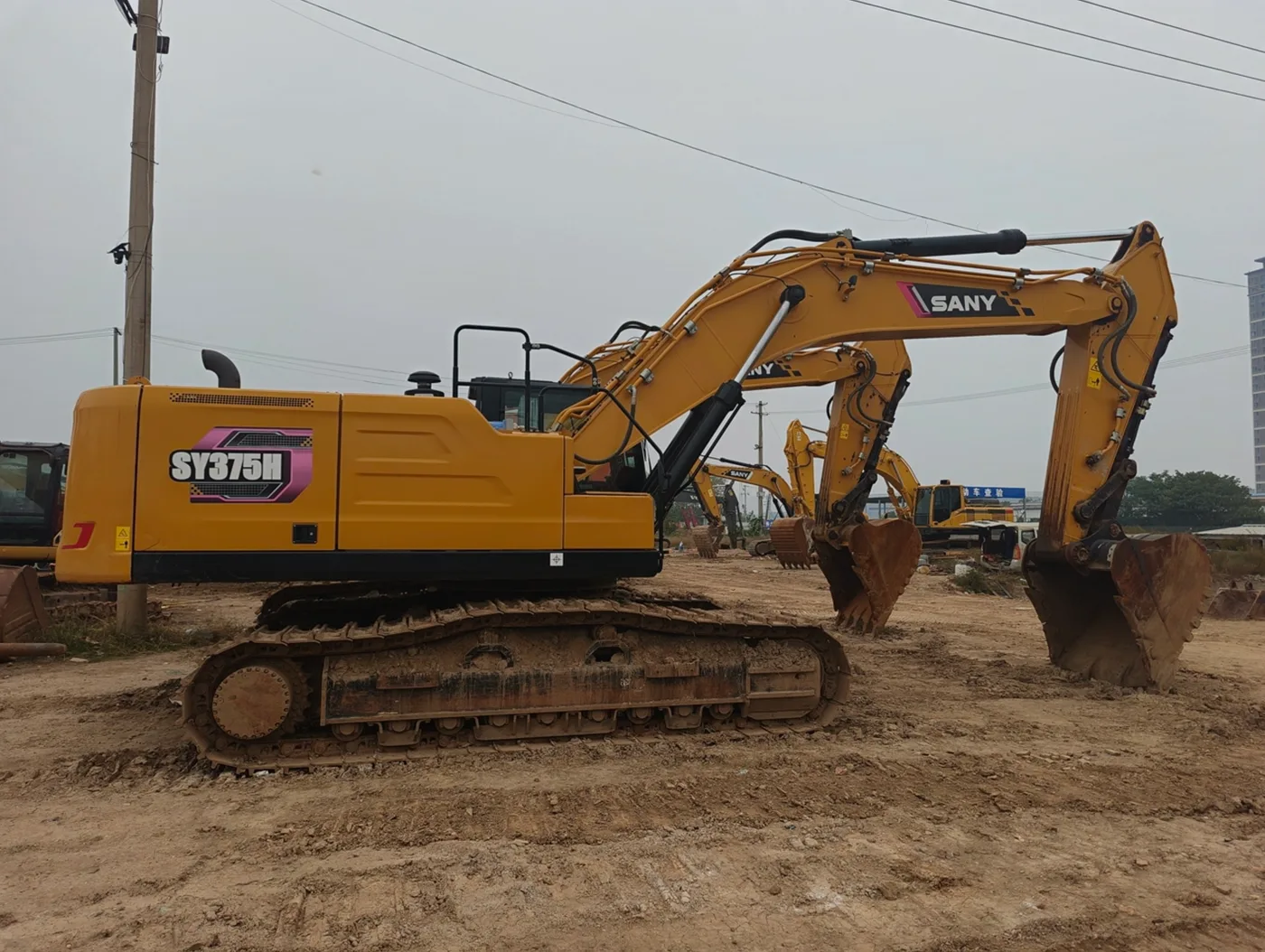
SANY SY375H-S: Oct 2022, approx. 2,000 h; Isuzu 6HK1, 7.79 L, 210 kW (approx. 286 HP); operating weight approx. 37.8–38.0 t; bucket approx. 1.9 m³;
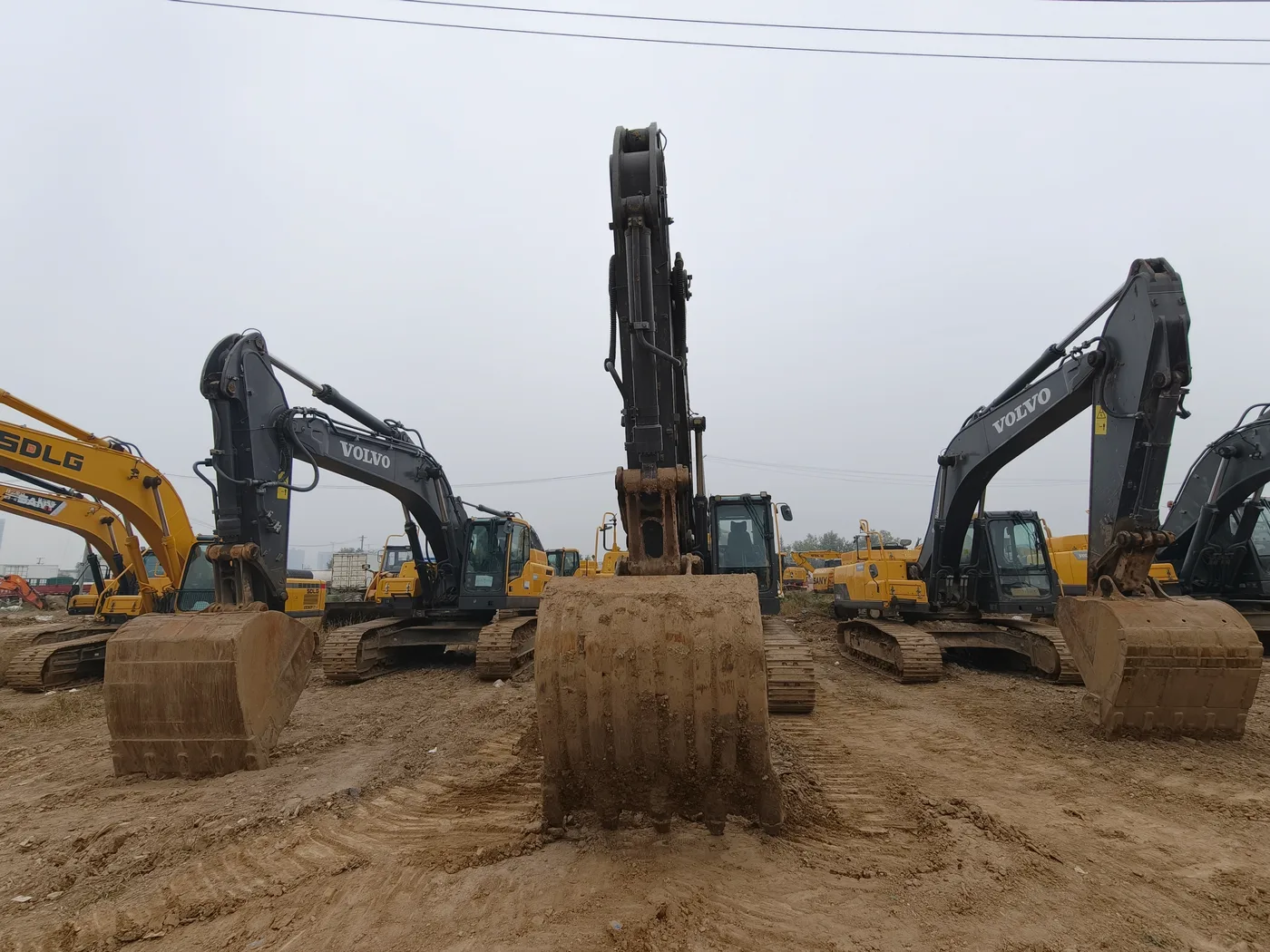
Volvo EC380DL: Mar 2019, approx. 4,000 h; Volvo D13F 13-34, 215 kW (approx. 292 HP); operating weight approx. 37.8–39.2 t; bucket approx. 1.7–1.9 m³, depending on attachment.
Before sourcing this class, verify separately: overall transport dimensions against destination road and port limits, track type (steel tracks or rubber pads), local availability of fuel and parts, and whether the engine emission meets import requirements. Engine serial number, weight range and actual bucket capacity follow the unit nameplate and inspection report.
5. Match bucket and working method to material
Loose soil, backfill, municipal trenches | 5–6 t mini or 20 t mid-size | Site width sets the class; watch trench depth and side slope
Clay, gravel, general foundations | 20 t mid-size | Digging force, tooth wear and hydraulic flow match
Weathered rock, aggregate loading, mass earthworks | 37–38 t large | Machine weight, bucket capacity, upper-structure and transport
Indoor demolition, yards, orchards | 5 t zero-tail-swing mini | Swing radius, gate width, dozer blade and breaker attachment
6. Unit-by-unit inspection checklist before ordering
①Hour-meter reading agrees with gauge and body nameplate; service records are traceable;②Engine starting behavior, exhaust, noise and oil leaks; verify engine model and power rating basis;③Hydraulic pump, control valve and hose joints are leak-free; cycle speed and digging force match the class;④Tracks, links, rollers and travel motors show wear within a reasonable range;⑤Bucket, arm and boom welds are free of cracks; bucket capacity follows the bucket tag;⑥Emission stage, steering side, attachments and accompanying spares meet destination import and use requirements.
7. Sourcing a machine matched to your job
We source used and new crawler excavators from China across 5 t mini, 20 t mid-size and 37–38 t large classes. Every supplied unit comes with a pre-shipment inspection report, walkaround and detail videos, and cross-checked export documentation; unverified parameters are clearly flagged at quotation stage rather than promised without confirmation.
Share your site type, main material, planned bucket capacity or daily output, destination port and new/used preference; we reply within three working days with matched units and inspection materials. Reach us on WhatsApp or the enquiry form.
Sources: published manufacturer specification sheets (XCMG official site, Komatsu China official site and model manuals) and registered stock records. Used-machine figures vary by batch and condition; final values follow the unit nameplate, bucket tag and inspection report.